
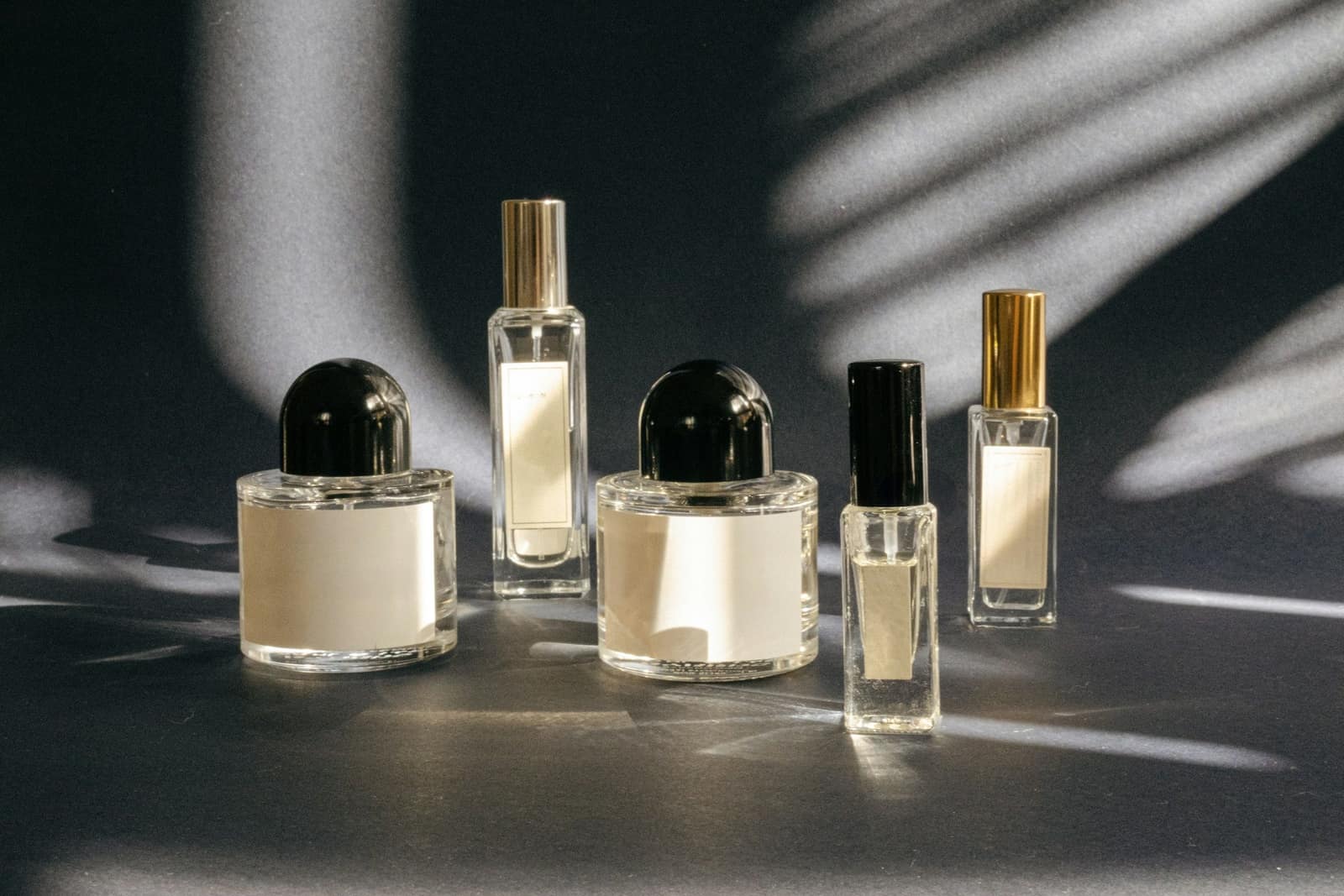
Choosing a fragrance in a shop is one of the stranger experiences in retail. You are asked to make a decision about something that has not finished happening. The scent that greets you in the first few seconds is not the one that will be on your skin in the afternoon, and the one you smell on a paper strip is not the one that will appear on you. It is no wonder that so many bottles are bought in enthusiasm and left on a shelf. A little knowledge about how fragrances are structured makes the whole process calmer, and makes the choice better.
Notes: the structure of a scent
Perfumers describe a fragrance in terms of notes, which are arranged in three loose stages that appear in sequence as the scent develops.
Top notes are what you smell first. They are light and volatile, and they evaporate quickly, usually within the first several minutes. They are often fresh and bright: citrus, herbs, green or light fruity accents. Their job is to make an impression.
Heart notes, sometimes called middle notes, emerge as the top notes fade. They form the body of the fragrance, and they tend to last longer: floral, spicy, fruity or green. This is the stage that people usually mean when they describe what a perfume “smells like”.
Base notes are the foundation. They are made from heavier, slower-evaporating materials, such as woods, resins, musks and vanilla-like notes, and they remain on skin and clothes for hours. They give a fragrance depth and persistence, and they are what remains when the rest has gone.
The three stages are a convenient way of describing something that is actually continuous. The notes overlap, and the way a perfume moves from one to another is a part of its character. A well-made fragrance is designed so that the progression is pleasing, not so that any one stage stands out.
Concentrations: what the name on the bottle means
The words after the brand name, such as eau de toilette and eau de parfum, describe how much fragrance oil the product contains relative to the alcohol and other ingredients. The general order, from lightest to richest, runs from eau de cologne and eau fraîche through eau de toilette and eau de parfum to parfum, sometimes called extrait.
In broad terms, the higher the concentration, the richer the scent and the longer it tends to last on the skin. That is a rule of thumb, not a guarantee. The actual percentages differ from one brand to another, there is no single legal definition that fixes them, and the character of the composition matters as much as the strength. A light, fresh eau de toilette can outlast a heavy eau de parfum if it is built on stronger base materials. Think of the concentration as a guide to intensity, not a measure of quality.
Why a scent smells different on you
Fragrance is not a fixed object. It is a mixture of volatile substances that interact with whatever it is placed on. Skin type, natural oils, body temperature, what you have eaten and the weather all influence how a fragrance develops, and two people wearing the same perfume can smell noticeably different. Heat tends to make a scent project more strongly and fade more quickly; cold slows it down.
This is why testing on skin matters. A paper strip shows you the structure, but only your own skin shows you the result. It is also why a recommendation from a friend is a starting point, not a guarantee.
How to test a fragrance properly
A calm approach to choosing is more reliable than a quick spray in a busy shop.
- Start with a few, not many. The nose tires quickly. After three or four scents, your impressions become unreliable, so limit yourself, and take a break between rounds.
- Use a paper strip for the first impression, and discard those you dislike straight away.
- Spray one or two favourites on your skin, on the inside of the wrist or the inner elbow, and leave them alone.
- Wait. Leave the shop if you can. Smell the fragrance after ten minutes, after an hour and after several hours. The base notes, which you will live with, only appear once the opening has gone.
- Decide the next day. If you still like it when you notice it on your skin, you have probably found something that suits you.
Some shops will give you a sample or a small decant to take home, which is a good way of living with a scent before committing.
Choosing by character, not only by name
It helps to know what you are drawn to. People tend to gravitate towards particular families: fresh and citrus, floral, woody, spicy or sweet, among others. If you notice that you consistently prefer one, use it as a guide, and look for fragrances that share the character. Conversely, if you have disliked several that share a note, that is useful information, too.
Think also about when and where you will wear it. A heavy, warm scent can feel overwhelming in a hot office; a very light one may vanish on a cold evening. Many people keep two or three fragrances for different seasons and occasions, which is a more realistic approach than searching for one perfect choice.
Wearing it well
Application affects how a scent behaves.
- Apply to clean, moisturised skin. A little unscented moisturiser can help a fragrance last, as scent clings to moisturised skin better than to dry skin.
- Use pulse points, where the skin is warmer, such as the wrists and the base of the neck, and restrain yourself. Two or three sprays are usually enough.
- Mind other people. Fragrance is shared with everyone nearby, and what feels subtle to you after an hour of wearing it may be strong to someone else. In shared spaces, restraint is a courtesy.
- Store it well. Heat, light and humidity degrade fragrance. A cool, dark place is better than a bright bathroom shelf.
Sensitivities
Some people react to fragrance. Perfumes contain a number of ingredients that can cause irritation or allergic reactions in sensitive individuals, and the ingredients are listed on the packaging. If you notice redness, itching or a rash where you have applied a fragrance, stop using it, and if the reaction is significant, speak to a pharmacist or GP.
The short version
A fragrance is a sequence, not a snapshot. Learn the three stages, treat concentration as a hint about intensity, test on skin and give a scent time before you decide. Choose by character, wear it sparingly, and keep it in a cool place. The aim is not to find the best fragrance, but one you notice with pleasure, hours after you have forgotten you put it on.
This article is general information. If you experience irritation or an allergic reaction to a fragrance product, stop using it and speak to a pharmacist or GP.


