
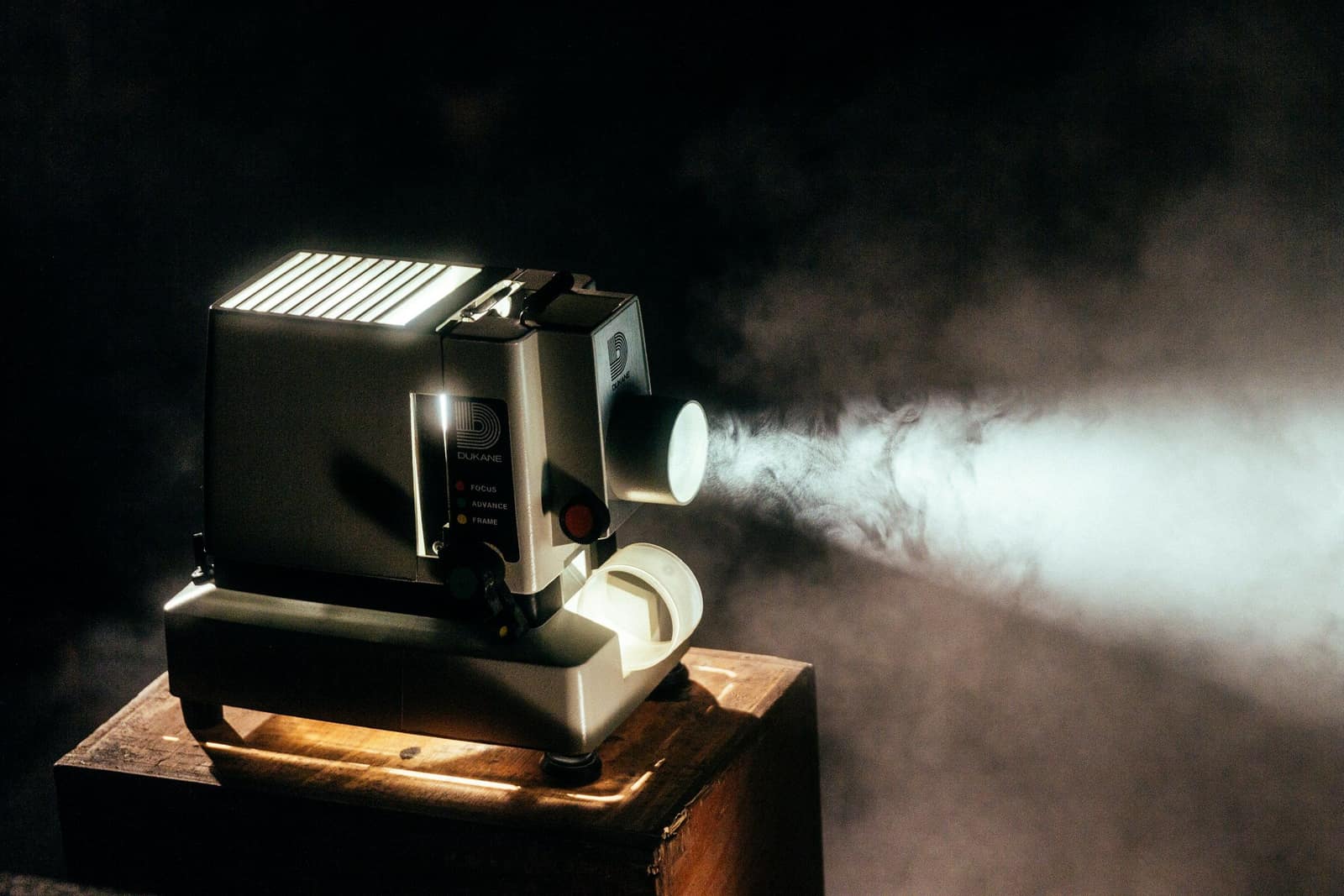
Most of us leave the cinema as the credits begin to roll, and most of us are not wrong to. The scroll is long, the names are small, and the titles can sound like a foreign language. Yet the credits are the closest thing a film has to a map of how it was made. They list the people whose decisions you have just spent two hours watching, and a little knowledge of what each of them does is one of the quickest ways to notice more in the next film you see.
This is not a complete directory, because a large production can credit hundreds of people. It is a guide to the roles that shape what you see and hear most directly.
The director
The director is responsible for the creative vision of a film, and for translating a script into images and sounds. That means working with actors on performance, deciding how scenes are staged and shot, and guiding the department heads so that their work fits together. A director rarely does the work of any one craft, but every craft is, in some sense, working to a direction.
When you read that a film is “a director’s film”, it usually means the director’s choices are visible throughout: the pacing, the tone, the recurring ideas. When a director’s name appears above the title, it is a convention that reflects this overall responsibility.
The producer
If the director is responsible for what the film is, the producer is responsible for making it possible. Producers typically raise or secure the money, assemble the team, manage the schedule and budget, and deal with distributors and others who bring the finished film to an audience. The role runs from the first idea to the release.
Credits often list several producers with different titles, such as executive producer or associate producer. The terms vary by production and are not always precise, but in general, those with the most direct involvement in making and organising the film are credited as producers, while executive producers are often connected to financing or oversight.
The writer
Screenwriters are credited for the screenplay, and sometimes separately for the story it is based on. The distinction matters: a film “based on” a novel or true events credits the source material as well as the person who adapted it. When there are several writers, the credit can reflect a complicated history of drafts, which the credits themselves do not explain.
The cinematographer
The cinematographer, also called the director of photography or DP, is in charge of the look of the film through camera and lighting choices. That covers lenses, framing, movement and light, and the relationship between them. They work closely with the director on how each scene should feel, and they lead the camera and lighting crews.
If you have ever noticed that a film is unusually warm, harshly lit, or full of slow, drifting shots, you were noticing the cinematographer’s work. It is a craft whose results are everywhere, even when attention is elsewhere.
The editor
Editors assemble the footage into the film. They choose which takes to use, decide the order and length of shots, and shape the rhythm of every scene and of the whole. They often work for many months after the shooting is finished, and they are sometimes described as the last writers of a film, because the choices they make can change the story.
Good editing is, almost by definition, difficult to notice. You see it when a conversation feels natural, when a chase keeps its tension, or when a cut carries a surprise. The editor also works closely with the sound and music teams.
The production designer
The production designer is responsible for the visual world of the film: the sets, the locations and the overall look of the spaces in which the story happens. They lead the art department, which designs and builds or finds everything from a whole street to the objects on a table. Their task is to make the setting feel true to the story, whether it is a real place, a historical period or an invented world.
When a film’s settings feel lived in, with objects that seem to belong to the people who use them, that is the production designer’s work, and often that of the set decorators who dress the space.
The costume designer
Costume designers design and source what the characters wear, and in doing so they tell you about who those characters are: their background, their circumstances, their changes over the course of the story. Costume works on you through detail and silhouette, long before you have a chance to think about it.
It is a craft that overlaps closely with fashion, but the aim is different. A costume has to serve a character and a story, and to work on camera, in motion, and across weeks of shooting. That is why a costume can be memorable without being fashionable, and a beautiful garment can fail on screen.
Composer, sound designer and the rest of sound
Sound is half of what a film is, and a surprising number of people contribute to it.
The composer writes the score, the original music that shapes the emotional experience, and works with the director and editor to place it.
The sound designer creates and organises the non-musical sound of the film: effects, atmospheres and the textures that make a world feel real.
The sound mixer and the boom operator capture dialogue on set, usually with a microphone held on a pole above the actors, so that the speech is as clean as possible. Later, the re-recording mixers balance dialogue, music and effects into the final soundtrack.
A film’s sound is easily the area where the most work goes unnoticed. If you can follow every word, feel the size of a room and are moved by a piece of music without thinking about it, the sound team has done its job.
The departments you may not have thought about
A few other credits are worth knowing.
- Visual effects artists create or alter images that cannot be captured on set, and work on far more films than the obviously fantastical ones.
- Casting directors find and recommend the actors, and play a large part in how a film feels.
- Make-up and hair designers work closely with costume to create the physical appearance of characters.
- Stunt coordinators plan and supervise physical action, and keep performers safe.
- The first assistant director runs the set, managing schedules and the pace of the day, and is rarely noticed by the audience.
How to use this
Knowing the roles changes how a film feels in a way that is quite practical.
- Choose one craft to watch for. On a second viewing, pay attention only to the sound, or the costumes, or the way scenes are cut.
- Follow a name. If you admire a film’s photography, look for other films by the same cinematographer. The same applies to editors, composers and designers.
- Stay for the credits once in a while. Many credit sequences include acknowledgements, music credits and, occasionally, extra scenes.
- Notice the order. Credits follow conventions, and the order and placement of a name often reflect a person’s role and agreements, though not always their contribution.
The short version
A film is a collaboration of many crafts, each solving a different problem. The director holds the vision, the producer makes it possible, and the cinematographer, editor, designers and sound team turn it into what you see and hear. You do not need to know all of it to enjoy a film, but knowing a little makes the experience richer, and gives you a reason to read the credits the next time.


